
You boosted a post last month. You turned on a delivery app promotion. You ran a coupon. The dining room looks about the same, the card statement looks worse, and nobody can tell you what one new guest actually cost.
Here is the honest answer. On published rates and a $40 check, one new guest costs anywhere from about $1 on a reservation network to $24 on a half-off voucher, and Toast's own paid social example lands at $52. Every channel on that list can work. But most of those numbers are too low, because they quietly assume every customer is new.
This matters more than it did. The National Restaurant Association says 60 percent of operators reported softer customer traffic in 2025, and 42 percent reported their restaurant was not profitable. When margin is that thin, a guess on marketing is a guess on payroll. Below: the formula, what each channel charges, the mistake that hides your real number, and how to work out your own.
The formula, and what most owners leave out
The math is one line. Per Toast's restaurant guide: customer acquisition cost equals marketing expenses divided by total new customers. DoorDash and ChowNow publish essentially the same fraction. Nobody argues about the division. The fight is over what goes on top and what goes on the bottom.
- Ad spend, plus anyone you pay to run it.
- Discounts. Toast is direct on this: count "the amount you discount for a promotion." In its example, $40 in discounts sits next to $1,000 in ads.
- Commissions on orders placed by first-time customers.
- Monthly fees for any tool whose job is finding guests.
The bottom is harder, because it counts new guests only. Toast says retention promotions stay out unless they bring in someone new, and it admits the problem plainly: "Without a customer database, it's not exactly easy to track who's new to your restaurant and who's not." Its two suggested counts are unique credit card transactions and loyalty program signups. Pick one and stick with it.
Watch for the shortcut. Toast's new pizzeria example assumes all 600 first-week orders came from new customers and gets $5.67 a head. Fair in opening week. In year three, the same assumption is fiction.
What each channel really charges
Delivery apps. DoorDash's merchant pricing page lists 15% on Basic, 25% on Plus and 30% on Premier, with pickup at 6% on every plan. Uber Eats lists 20% on Lite, 25% on Plus, 30% on Premium and 15% for self-delivery, with pickup at 7% if you validate in-store pricing and 10% if you do not. What they get right: nothing is due until an order lands.
Reservation networks. OpenTable lists Basic at $149 a month plus $1.50 per network cover after the first 30 days, Core at $299 plus $1, and Pro at $499 plus $1. Reservations from your own website are included on Core and Pro; Basic charges $0.25 a cover or a $49 monthly flat fee. OpenTable also says you pay only for seated guests.
Vouchers. Groupon has no upfront cost and takes a commission on redeemed vouchers at a rate agreed before launch. It says there is no universal commission percentage, and its examples run 20% and 40%. The discount is the bigger bill, and our full Groupon math walks through it.
Paid social. There is no rate card. Toast's worked example spends $1,000 on Facebook ads plus $40 in discounts, gets 20 new customers, and lands at $52 each.
Want a benchmark to compare against? Be careful. DoorDash's merchant blog lists $12.91 for Facebook and $19.67 for Instagram as cost per action, and $26.58 for Google as cost per lead, drawn from third-party reports, the dated ones from 2022 or earlier. An action can be a click, and a lead is not a guest. DoorDash says so itself: "every platform measures success differently." ChowNow cites $27 for quick service, $83 for fast casual, $125 for casual dining and $180 for fine dining, from an industry report it does not name. Treat these as rough context, never as a target.
Cost per order is not cost per new guest
A 25% commission on a $40 order is $10. That is only your acquisition cost if every order comes from a first-time customer, and they do not. If half your app orders are new customers, each new guest costs $20. If one in four is new, $40. If one in ten is new, $100. Same commission, same app, a very different number (Build&Fund calculation, illustrative).
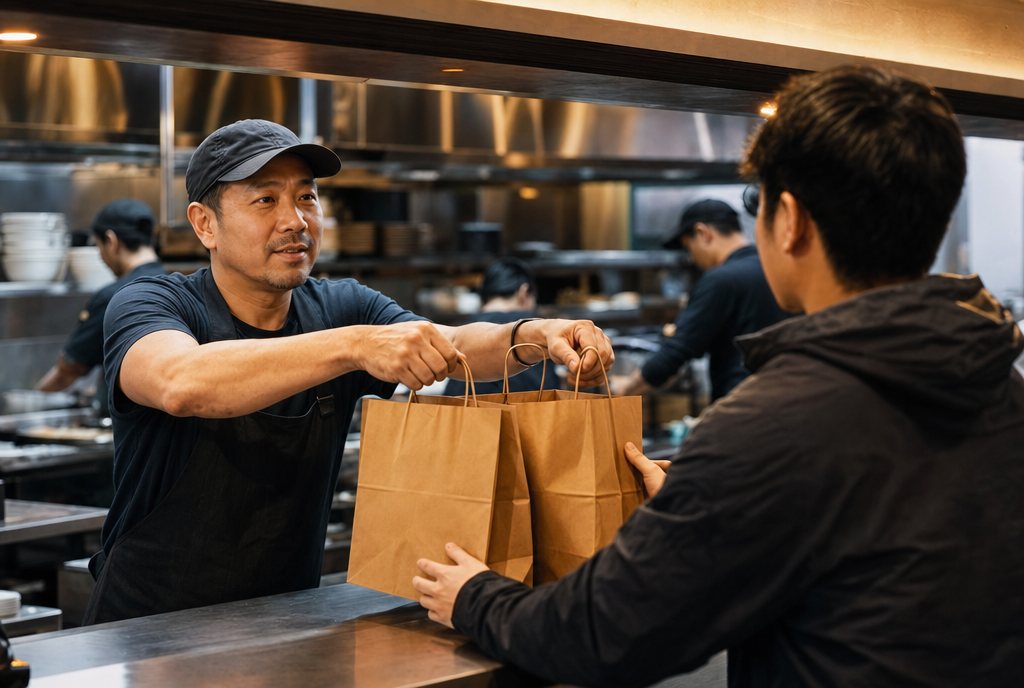
Nobody publishes your ratio. Pull it from whatever customer data the app gives you. If it gives you none, that tells you who owns the guest.
Then the second problem: the commission does not stop. A customer who orders six times in a year costs $60 in commissions at 25%, or $72 at 30%. By the sixth order, the app has passed the $52 paid social example, and the app is still charging on order seven (Build&Fund calculation, illustrative). In fairness, that ad came with no promise anyone would ever come back. The app only charges when they do.
Add a loan repaid out of those same sales and you have stacked a second cut on one ticket. We broke that down in our POS capital comparison.
How to work out your own number in an afternoon
-
1Pick one channel and 30 days.One channel, one month, one answer.
-
2Add up everything on top.Ads, discounts, commissions on first-time orders, monthly tool fees.
-
3Count new guests only.Unique card transactions or loyalty signups, per Toast. If you have neither, use a first-visit offer code for the test, and count the codes.
-
4Divide.Illustrative example: $600 in ads plus $200 in discounts, 25 new guests. That is $32 per new guest.
-
5Compare it with what a visit leaves you.National Restaurant Association 2024 medians for full-service operators: food and non-alcohol beverage at 32.0% of sales, labor at 36.5%. That leaves about 31.5%, or $12.60 on a $40 check, before rent, card fees and everything else (Build&Fund calculation). Use your own numbers if you have them.
Now the number means something. At $12.60 a visit, that $32 guest pays back on about the third visit, counting the first. The $24 voucher guest takes about two visits at full price. The $52 paid social guest takes about four. DoorDash's blog cites a 3:1 ratio of lifetime profit to acquisition cost as a common cross-industry standard. Apply it and the $52 guest needs about $156 in margin, or roughly 12 visits (Build&Fund calculation).
Delivery runs differently. Take the commission off that same $12.60 and you keep about $2.60 per order at 25%, or $0.60 at 30%. Dining room labor is lighter on delivery, so your real figure is somewhat better. Run your own numbers before you promote the channel harder.
The channels head to head
| Channel | How you pay | What it costs | Paid from |
|---|---|---|---|
| Delivery app, 25% plan | Commission on every delivery order | $10 on a $40 order, new guest or not | Your payout, on every order |
| Reservation network (OpenTable Core) | Monthly plan plus a fee per seated network guest | $299 a month plus $1 per network cover | Monthly charges, regardless of who is new |
| Voucher (Groupon) | Discount plus commission on redeemed vouchers | $24 to $28 on a half-off $40 check, at 20% to 40% commission | The check itself, deducted before payout |
| Paid social | Ad spend up front, plus any discount | $52 per new customer in Toast's worked example; yours will vary | Cash, before a guest shows up |
| Capital + Customers | Only as new diners come in and redeem food and beverage credit | No interest, no factor rate | New guests, never a daily card pull |
The first four rows are marketing you pay for in cash or in margin. The last row is a different tool: funding through our capital partners, in exchange for future food and beverage credit. You repay only as new diners come in and redeem that credit, not a percentage of the sales you already ring. Compare it on how it gets repaid, not as a price per guest.
When paying for a new guest makes sense
- You know the real number. Spend divided by counted new guests, not cost per order.
- It pays back in visits you can see. If your data shows guests rarely come back, a four-visit payback is a loss.
- The guest lands on a slow shift. A discounted table on your Friday rush replaces a full-price one.
- You can reach them again yourself. Email, loyalty or your own ordering page, so visit two does not cost what visit one did.
Skip it when the next visit costs as much as the first, or when traffic is not the real problem. If you are buying covers to make payroll, that is a cash problem, and our guides to restaurant working capital and slow season cash flow will serve you better than another promotion. And do not forget the channel with no ad bill: a holiday gift card from a regular can put someone new in the seat.
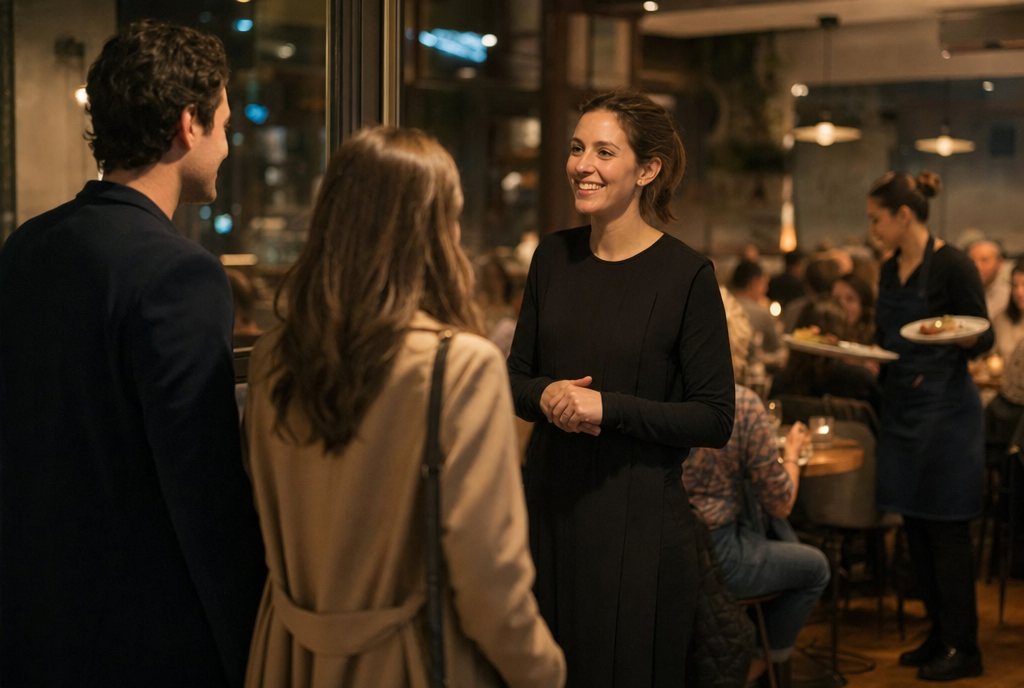
The other way to fund growth: repay with new diners, not your sales
Build&Fund backs great restaurant operators with new customers through their doors and the capital to handle them. Through our capital partners, qualifying restaurants get access to $10,000 to $50,000+ in initial funding, in exchange for future food and beverage credit. You repay only as new diners come in and redeem that credit. Not a percentage of the sales you already ring. Not a daily card pull. Never a cash payment.
One document starts your review: your POS sales report. Decisions move fast, and approved operators are funded within days. For qualifying operators, second rounds can quickly scale to six figures. No credit check. No personal guarantee.
Who qualifies: $500K+ in annual sales and a 4.0+ Google rating. Every food and beverage establishment can qualify: full service, quick service, bars, and cafes.
-
1Confirm you clear the bar$500K+ in annual sales and a 4.0+ Google rating.
-
2Submit one documentYour POS sales report. No credit check, no personal guarantee.
-
3Fast decisionDecisions move fast. No weeks of back-and-forth.
-
4Funded within days$10,000 to $50,000+ to start, through our capital partners.
-
5Repay only as new diners redeem creditFood and beverage credit, never in cash.
-
6Scale as it proves outFor qualifying operators, second rounds can quickly scale to six figures.
Frequently Asked Questions