How to Get Capital for Small Business After Bank Rejection

📅 April 2026 · ⏱ 7 min read · Build&Fund Advisory Team
When Marcus Chen's HVAC company in Phoenix needed $175,000 to purchase three new service vehicles and hire additional technicians, he walked into his bank of twelve years expecting a straightforward conversation. His business had generated $1.2 million in revenue the previous year. He'd never missed a payment on his existing business credit card. Yet three weeks later, he received a form letter: application denied. If you're wondering how to get capital for small business growth after hearing "no" from your bank, you're far from alone, and you have more options than you might realize.
The Real Cost of Being Denied Traditional Financing
A bank rejection doesn't just sting emotionally. It creates tangible financial damage that compounds over time. For Marcus, those three weeks of waiting meant losing a commercial contract worth $89,000 because he couldn't guarantee the expanded capacity. Meanwhile, his top technician, tired of working overtime, accepted a position with a larger competitor. The rejection letter cost him far more than the loan itself would have.
This pattern repeats across industries every day. Restaurant owners watch kitchen equipment fail while their loan applications sit in underwriting limbo. Retail shop owners miss seasonal inventory windows. Service contractors turn away jobs they could easily handle with proper working capital. The opportunity cost of delayed or denied funding often exceeds the actual capital need by a factor of three or more.
Why Banks Keep Saying No to Profitable Businesses
Understanding why traditional lenders reject viable businesses helps you navigate alternative funding pathways more effectively. Banks operate under strict regulatory frameworks that prioritize minimizing default risk over maximizing lending volume. Their algorithms weigh factors like time in business, personal credit scores of owners, collateral availability, and industry risk classifications. A restaurant with strong cash flow might still face rejection simply because food service carries a higher statistical failure rate than other sectors. Your specific situation matters less than the category you fall into.
The disconnect has widened in recent years as banks have consolidated and automated their underwriting processes. Relationship lending, where your banker understood your business and could advocate for your application, has largely disappeared from major institutions. Today's loan officers often lack the authority to approve anything outside standardized parameters. This doesn't reflect poorly on your business; it reflects the structural limitations of traditional banking.
A bank rejection isn't a verdict on your business. It's simply a mismatch between your profile and one institution's narrow lending criteria. Alternative capital sources evaluate businesses using entirely different frameworks, often focusing on cash flow velocity and growth trajectory rather than legacy credit metrics.
How to Get Capital for Small Business: A Step-by-Step Approach
- 1Diagnose Why You Were Denied
Request a specific explanation from the rejecting bank. Federal regulations require lenders to provide adverse action notices detailing the primary reasons for denial. Common factors include insufficient time in business, debt-to-income ratios, industry classification, or gaps in documentation. Understanding the specific obstacle helps you determine whether to address it or simply route around it with alternative funding sources that don't weight that factor as heavily.
- 2Separate Personal and Business Credit Profiles
Many small business owners inadvertently handicap their funding options by failing to establish distinct business credit. Register for a DUNS number, open trade accounts that report to business credit bureaus, and ensure your business entity has its own credit history independent of your personal profile. This separation also protects your personal assets and creates more funding pathways that don't require personal guarantees.
- 3Explore Credit Stacking Strategies
Rather than seeking a single large loan, sophisticated business owners access capital through multiple smaller credit facilities strategically combined. This approach, sometimes called credit stacking, allows you to aggregate $50,000 to $250,000 or more at favorable rates by leveraging different types of business credit simultaneously. When structured properly, these facilities often carry 0% introductory rates and don't require personal guarantees.
- 4Consider Revenue-Based Financing
If your business generates consistent revenue but lacks the collateral or credit history banks require, revenue-based financing offers an alternative path. These arrangements advance capital based on your actual cash flow patterns, with repayment automatically adjusting to your business's performance. During slower periods, you pay less; during strong months, you pay more and retire the balance faster.
- 5Investigate SBA Alternative Programs
While SBA loans still flow through banks, the Small Business Administration offers specialized programs with more flexible qualifying criteria. The SBA Microloan program serves businesses that might not qualify for larger loan products, while Community Advantage lenders focus specifically on underserved markets and business owners who don't fit traditional banking profiles. These programs often accept applications that conventional bank channels would reject.
- 6Leverage Equipment and Invoice Financing
Asset-based lending sidesteps many traditional underwriting concerns by securing capital against specific collateral. If you need funds for equipment, the equipment itself serves as security, making your personal credit less relevant. Similarly, invoice financing or factoring converts your outstanding receivables into immediate working capital. These options work particularly well for B2B service businesses with reliable corporate clients.
What to Look for in Alternative Funding Sources
- ✓ Transparent fee structures with clear APR disclosures, not just factor rates
- ✓ Funding timelines measured in days, not weeks or months
- ✓ Flexible repayment terms that align with your cash flow cycles
- ✓ No prepayment penalties that trap you in expensive financing longer than necessary
- ✓ Options that don't require personal guarantees or UCC liens on all business assets
- ✓ Funding partners who understand your specific industry's cash flow patterns
- ✓ Clear documentation of all terms before you commit to anything
Access $50K–$250K at 0% Introductory Rates
Build&Fund's Business Funding and Credit Stacking Program helps qualified business owners secure capital without personal guarantees or traditional bank approval. Our team structures customized funding solutions based on your specific situation and growth objectives.
Learn More →Common Mistakes That Sabotage Your Funding Search
- Applying everywhere simultaneously: Each credit application generates an inquiry that can temporarily lower your credit scores. Desperate business owners sometimes shotgun applications across dozens of lenders, inadvertently damaging their profiles and triggering fraud alerts. Work with a funding advisor who can pre-qualify you with soft inquiries before submitting formal applications.
- Accepting the first offer out of urgency: Predatory lenders specifically target business owners who've been rejected by banks and feel they have no other options. These operators offer fast funding at effective APRs exceeding 50% or more. Taking on expensive capital in a moment of desperation often creates a debt cycle that constrains your business for years. Always compare at least three funding options before committing.
- Ignoring hidden revenue already in your business: Many business owners seek external capital without first recovering money that's already theirs. Unclaimed tax credits, excessive merchant processing fees, and payroll inefficiencies quietly drain cash that could fund growth without adding any debt. Before taking on new financing obligations, ensure you've captured every dollar your business has already earned.
Funding Approval Rates: Banks vs. Alternative Sources
The landscape of small business financing has shifted dramatically, with alternative lenders now approving applications at rates that dwarf traditional banking approval percentages. Understanding these differences helps you allocate your time and energy toward funding sources most likely to say yes.
These numbers reveal why business owners who focus exclusively on traditional bank financing often struggle unnecessarily. Online lenders and alternative capital sources approve more than twice the percentage of applications compared to large banks. This doesn't mean their money is more expensive. Structured properly, alternative financing can match or beat traditional loan rates while offering faster funding and more flexible terms.
Building Your Capital Strategy for Sustainable Growth
Learning how to get capital for small business success means thinking beyond any single funding event. The most resilient businesses maintain relationships with multiple capital sources, establish credit facilities before they need them urgently, and continuously optimize their financial operations to preserve cash flow. They also recognize that external financing represents just one piece of a comprehensive capital strategy.
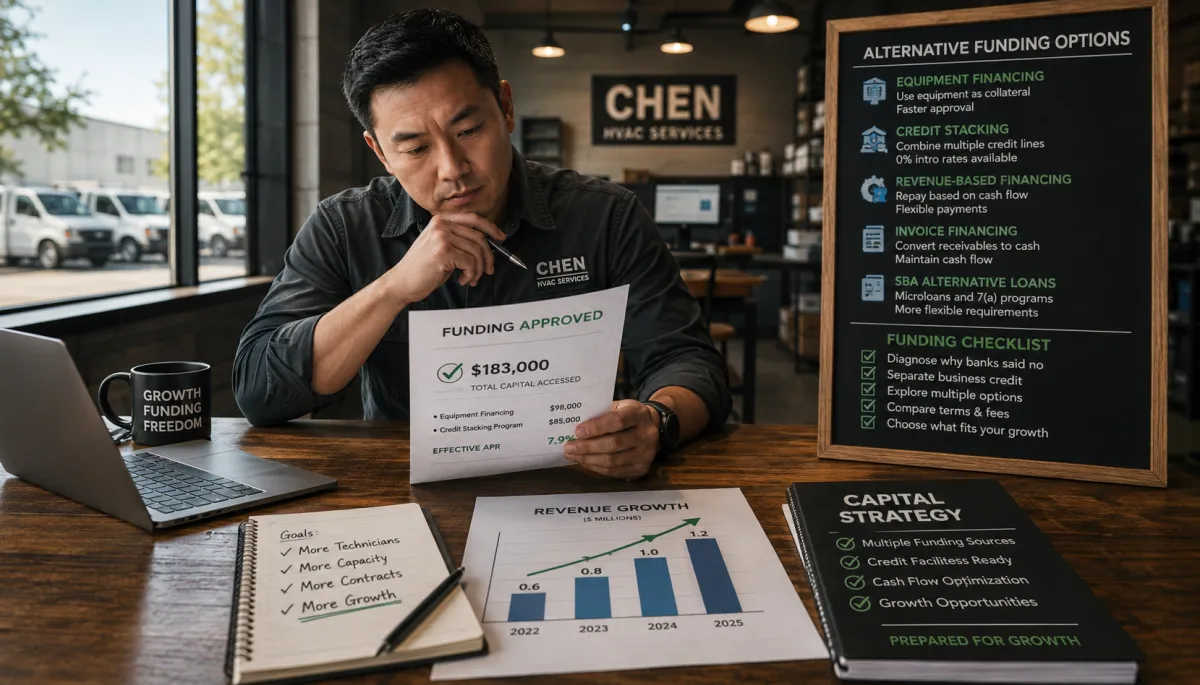
Marcus Chen eventually secured funding through a combination of equipment financing for his new vehicles and a credit stacking arrangement that provided working capital for the additional hires. Total capital accessed: $183,000 at an effective rate lower than his bank had quoted before rejecting him. More importantly, he now maintains credit facilities that give him instant access to growth capital whenever opportunities arise: no more waiting weeks for approval letters that might never come.
Stop Leaving Money on the Table
Before you take on any new financing, discover how much hidden revenue your business might already be sitting on. Our free analysis identifies unclaimed tax credits, payroll savings, and merchant processing recoveries that could fund your growth without adding debt.
Get Your Free Hidden Revenue Analysis →Or explore our Business Funding and Credit Stacking Program